
How to Defrost Frozen Beef From a Beef Share Without Ruining It
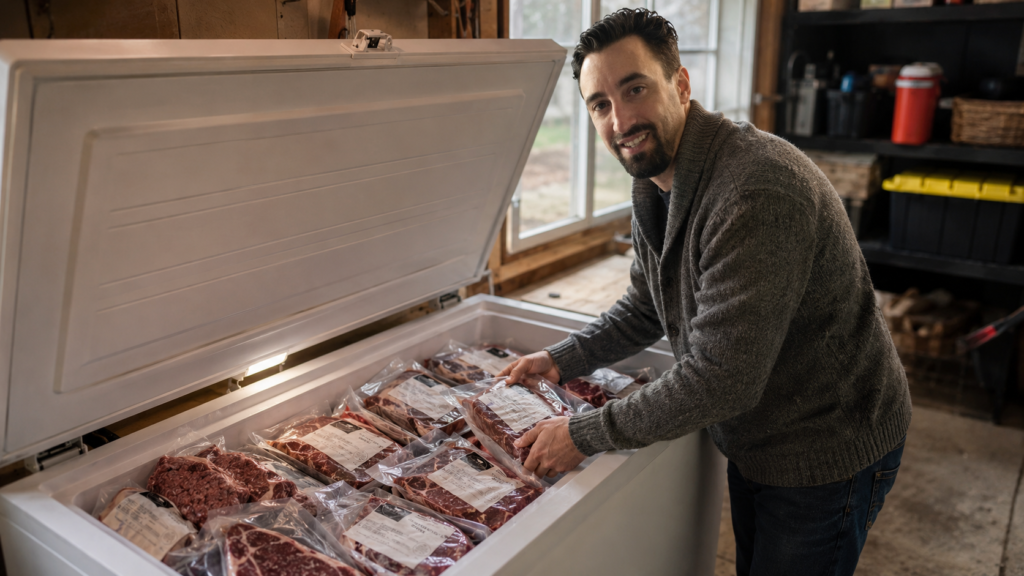
When you buy a beef share, you stop thinking about frozen beef as an occasional backup dinner and start living with it as part of everyday life.
That’s part of what makes buying direct so satisfying. You have steaks, roasts, ground beef, stew meat, short ribs, maybe even soup bones or organ meats, all sitting in the freezer waiting to become real meals. But it also means one small kitchen habit starts to matter a lot more than most people expect:
How you thaw it.
Because if you’re pulling beef from the freezer week after week for months, thawing isn’t a minor detail. It’s one of the places where people quietly lose quality. A great steak can turn patchy and waterlogged before it ever hits the pan. A roast can thaw unevenly. Ground beef can go from “easy dinner” to “why is this such a mess?” just because the defrost step got rushed.
The good news is that defrosting beef (or really any cut of meat) well isn’t complicated. But it does help to know what actually works, what only works when you’re in a hurry, and what people keep doing that makes good beef perform worse than it should.
Why thawing matters more when you buy beef in bulk
If you pick up a random pack of store beef once in a while, thawing mistakes usually feel forgettable.
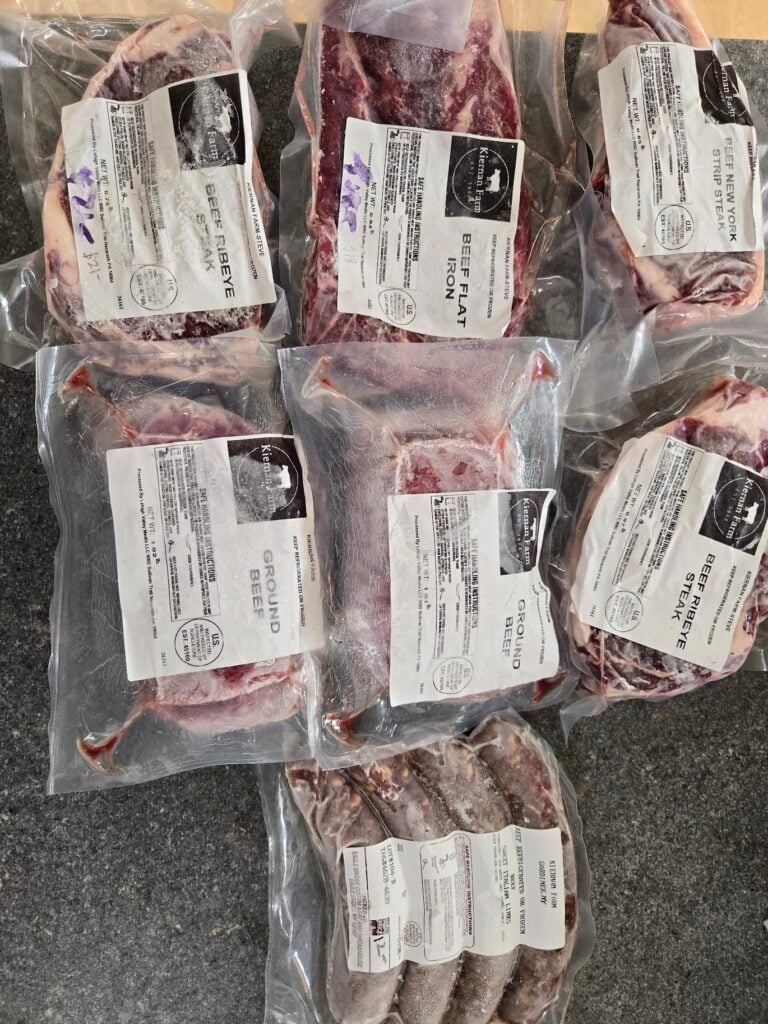
When you buy a quarter, half, or whole cow, it’s different. You’re working through a freezer full of beef over time. That means the quality of the beef you paid for isn’t just about how it was raised, finished, or cut. It’s also about how you handle it once it gets home.
This is especially true if you bought from a farm because you cared about better sourcing, better flavor, more thoughtful production, or a fuller range of cuts. If that’s the reason you bought direct, it’s worth learning how to thaw that beef in a way that protects what made it worth buying in the first place.
The refrigerator method is still the gold standard
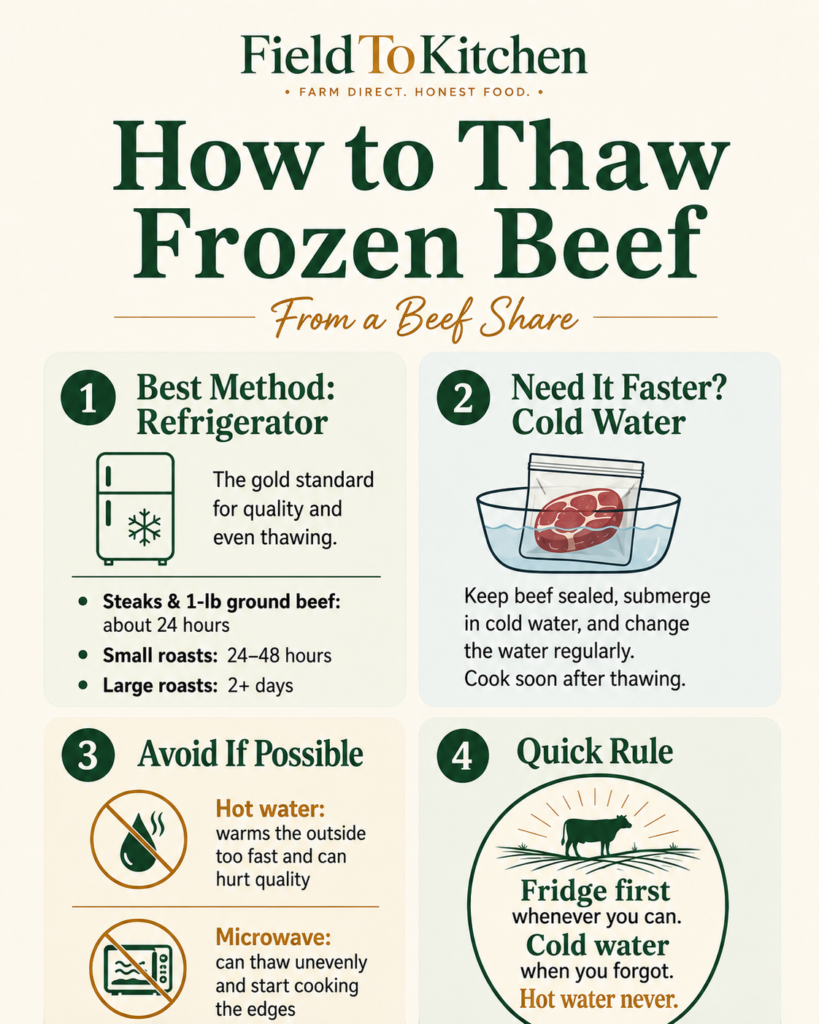
If you want the best balance of food safety, even thawing, and overall quality, the refrigerator is still the best method.
It’s not exciting. It’s not fast. But it works.
A refrigerator thaw gives the meat time to come up slowly and evenly, which is exactly what you want. It’s the method least likely to leave you with an outer layer that’s soft and warm while the center is still icy. It’s also the easiest way to avoid unnecessary moisture loss, texture problems, and the half-thawed state that makes cooking more frustrating than it needs to be.
As a general planning guide:
- Steaks and one-pound packages of ground beef often thaw overnight or within about 24 hours
- Larger roasts may need 2 days or more
- Especially thick or awkwardly shaped cuts can take longer than you think
The biggest challenge isn’t the method. It’s remembering early enough.
If you buy beef in bulk, this is where a little routine helps. Pull tomorrow’s dinner out the night before. Move a roast to the fridge two days before you actually want to cook it. If you do that consistently, a lot of freezer-related frustration quietly disappears.
The cold water method is what to use when you forgot
If you want to defrost steaks or ground fast fast then cold water can do the trick. This is the method for the nights when you didn’t pull anything out and still want your beef tonight.
Cold water thawing works well, but it works best when you treat it like a real process rather than a vague idea. The beef should stay sealed, go into cold water, and the water should be changed regularly so it stays cold and keeps the thaw moving.
This method works especially well for steaks, ground beef, smaller roasts, and flatter vacuum-sealed cuts. It’s less ideal for very large roasts or anything thick enough to thaw unevenly.
What makes cold water thawing useful is that it gets you out of the “I forgot” situation without jumping all the way to the microwave. It’s faster than the fridge, but it still gives you a decent result when done properly.
If you thaw beef this way, plan to cook it soon afterward. This isn’t the method for thawing now and deciding what to do tomorrow.
Why hot water is a bad idea
Hot water feels like the clever shortcut people wish worked. It doesn’t.
The problem isn’t just safety. It’s that hot water thaws the outside of the meat far faster than the inside can follow. The exterior warms and starts to soften, sometimes even beginning to cook at the surface, while the center stays frozen or barely cold. That means you’re damaging the part of the cut you care about most before it’s even ready to go near a pan.
With steaks, this can make the outside soft and waterlogged while the middle still feels stiff. With larger cuts, it’s one of the fastest ways to create a thaw that’s annoying to cook and disappointing to eat.
Hot water is the classic example of solving one problem by creating two worse ones.
Why the microwave usually disappoints
The microwave is fine for plenty of kitchen tasks. Thawing good beef usually isn’t one of them.
The issue is unevenness. Even on the defrost setting, parts of the meat can start to cook while other parts are still frozen. On ground beef, that’s annoying but workable. On a good steak, it’s often the moment quality starts slipping.
This is especially true for thinner cuts or steaks with irregular thickness. The edges begin to gray out and the texture gets strange before you’ve even started cooking for real.
If you need the microwave, use it as a last resort and cook the beef immediately. Don’t microwave-defrost a steak and then put it back in the fridge for later.
Can you cook beef from frozen?
Sometimes, yes. But the better question isn’t “can you?” It’s “when does it actually work well?”
Cooking from frozen can work for some steaks if you’re doing a controlled sear-and-finish approach, ground beef if you’re willing to break it up as it cooks, and smaller flatter cuts where even cooking is easier to manage.
It tends to work less well for large roasts, cuts where even doneness really matters, anything going into a slow cooker, or situations where you want the best possible sear with minimal hassle.
On the slow cooker point specifically: thaw first. Large frozen cuts generally don’t heat up quickly enough in a slow cooker, which creates food safety concerns and uneven results.
Cooking from frozen is useful when it’s part of a deliberate approach. It’s less useful when it’s just a rushed workaround.
Does thawing affect grass-finished and grain-finished beef differently?
In practical kitchen terms, it often can.
Not because the thawing rules are completely different, but because leaner beef tends to be less forgiving of sloppy handling.
Grass-finished beef is often leaner than grain-finished beef, especially in certain cuts. That means a rushed thaw, an uneven defrost, or an overly warm exterior can show up faster in the final result. A lean steak that’s been poorly thawed can feel less juicy and less forgiving in the pan.
Grain-finished beef, especially more marbled cuts, often has a little more cushion. That extra fat can make a steak slightly more forgiving if your thaw was imperfect.
That doesn’t mean grass-finished beef is delicate. It means that when you buy leaner, more thoughtfully raised beef, good thawing matters even more. It’s one of those quiet details that affects whether people walk away thinking “that was incredible” or “I thought this was supposed to be better.”
The one thing people get wrong that ruins a good steak before it hits the pan
They rush the thaw.
More specifically, they let the outside get too warm and too soft while the center is still cold, stiff, or partially frozen.
That’s the mistake.
It leads to uneven cooking. The outside overcooks before the middle catches up. The surface moisture gets messy. The sear suffers. And then people blame the steak, the farm, or the pan when the real problem started an hour earlier at the sink or in the microwave.
The thaw is part of the cook.
It doesn’t need to be precious. It just needs to be intentional.
One more step worth knowing: before the pan
Once your beef is fully thawed, two things make a real difference before it hits heat.
First, pat it dry. Moisture on the surface of a steak is the enemy of a good sear. A paper towel and 30 seconds of attention before cooking will do more for your crust than almost anything else.
Second, let it sit at room temperature for a short while before cooking, especially for thicker steaks and larger cuts. Cooking cold beef straight from the fridge leads to uneven doneness, with the outside overcooking before the center catches up. Fifteen to thirty minutes on the counter before a steak goes in the pan is usually enough. For large roasts, a bit longer is fine.
Neither of these steps is complicated. But both of them are part of protecting the quality you paid for.
Practical thawing guide by cut
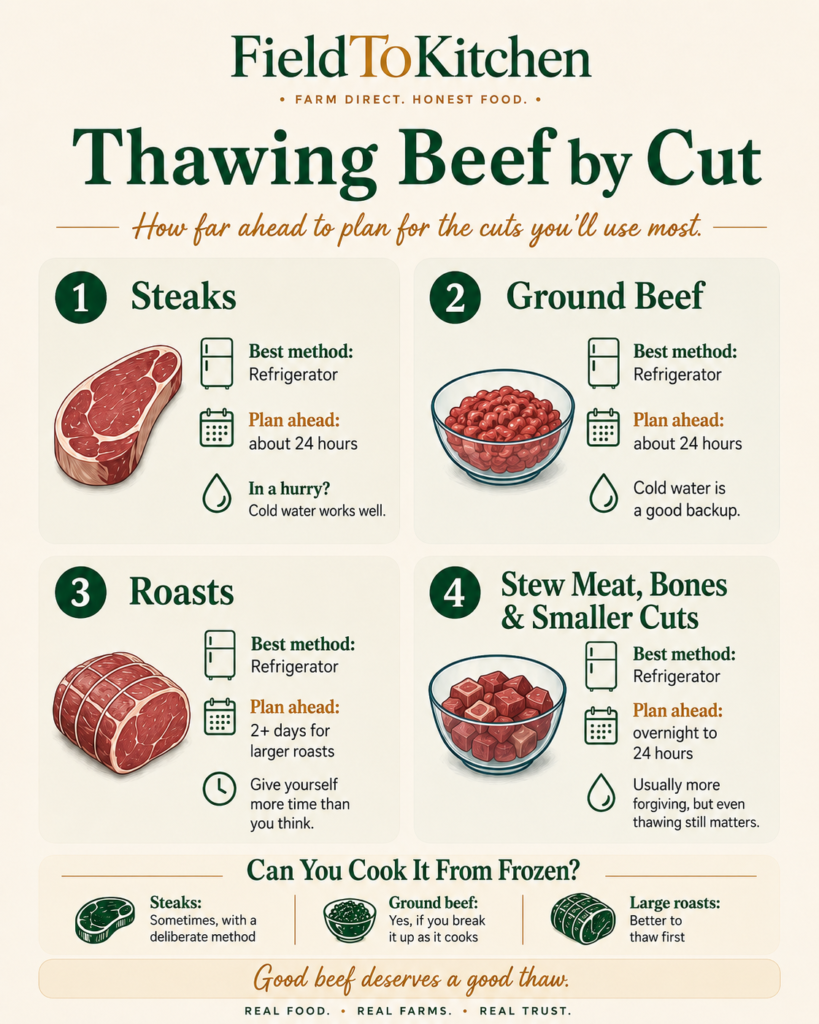
Steaks Best method: refrigerator, overnight or up to 24 hours Faster option: cold water, sealed and submerged Avoid if possible: microwave, especially for premium or leaner cuts
Ground beef Best method: refrigerator Good faster option: cold water Microwave: workable in a pinch, but cook immediately
Roasts Best method: refrigerator, with more lead time than you think — plan for 2 days or more for larger cuts Cold water: only for smaller roasts if truly necessary Avoid: warm or hot water, slow cooker from frozen
Stew meat, short ribs, bones, and less delicate cuts These are generally more forgiving than steaks, but you still get better results with a slow, even thaw. Refrigerator is still the best option. Cold water works well for stew meat and shorter cuts if you’re in a hurry.
Keep it simple
If you bought a beef share, you don’t need a complicated thawing system. You just need a few habits that are easy to repeat:
- Fridge first whenever you can
- Cold water when you forgot
- Microwave only when you truly need it, and cook immediately
- Hot water never
- Large cuts need more time than you think
- Pat dry before the pan
- Let thicker cuts rest at room temperature before cooking
- Leaner beef is often less forgiving of rushed handling
That’s the FieldToKitchen version of this.
Buying direct isn’t just about finding better beef. It’s about getting more out of it once it’s in your kitchen. For people working through a freezer full of steaks, roasts, and ground beef over the course of a season, thawing is one of the easiest places to either protect that value or quietly lose it.
Done well, it’s simple. Done badly, it shows up on the plate.
And once you’ve spent good money on good beef, that’s worth paying attention to.