
What Is a Beef Share? A Beginner’s Guide to Buying Beef in Bulk
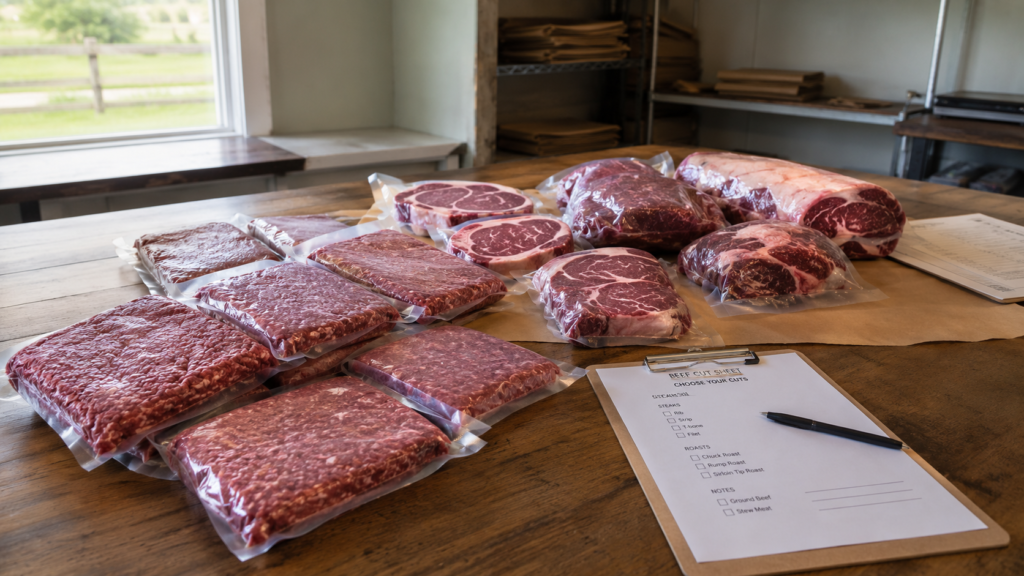
Buying a Beef Share: A Beginner’s Guide to Quarter, Half, and Whole Cow Shares
A beef share is one of those things that sounds straightforward until you start looking into it. You are buying a portion of a cow directly from a farm, typically in share sizes of a quarter, a half, or a whole (though some farms do offer eighths), and receiving a mix of cuts once it has been processed.”
Seems simple enough right?
But the questions that follow tend to multiply quickly: How much do you actually get? What cuts are included? What is a cut sheet? And is it actually worth it for your household?
The good news is that once you understand the basics, beef shares start to feel much less mysterious. And if you are buying directly from a local farm, that knowledge matters even more, because the more you know going in, the better equipped you are to make decisions about what actually ends up in your freezer.
What is a beef share?
A beef share is a portion of an animal that you purchase directly from a farm, usually as a quarter, half, or whole cow. Instead of buying individual cuts one at a time, you are buying a share of the animal and then receiving a mix of cuts once it has been processed.
That mix usually includes some combination of steaks, roasts, ground beef, brisket, ribs, stew meat, soup bones, and sometimes organ meats if requested. The exact breakdown depends on the farm, the butcher, and how the animal is processed, but the basic idea is simple: you are buying beef in bulk, closer to the source.
For some people, that is the appeal. A beef share can feel like a more intentional way to buy meat — less piecemeal, more connected to how the animal was actually raised and broken down. For others, it is mostly a practical decision: fill the freezer once, cook from it for months, and worry less about constantly restocking.
Why people buy beef shares
People are drawn to beef shares for different reasons. Some are looking for better quality beef. Some want a closer connection to the farm raising it. Some like the idea of filling their freezer a few times a year instead of constantly buying meat week to week. Others are feeding a family and want a more consistent, practical way to stock up.
A beef share can also change the way you think about food in a useful way. It shifts your focus from a handful of familiar cuts to the animal as a whole. You start thinking beyond ribeye and filet and paying more attention to sirloin, stew meat, brisket, bones, and the cuts that make everyday meals work. That broader perspective is part of what makes buying direct feel different.
That said, buying a beef share is not automatically the right choice for everyone. It takes freezer space, a little planning, and some willingness to work with a wider range of cuts than you might normally buy.
Quarter, half, and whole cow: which is right for me?
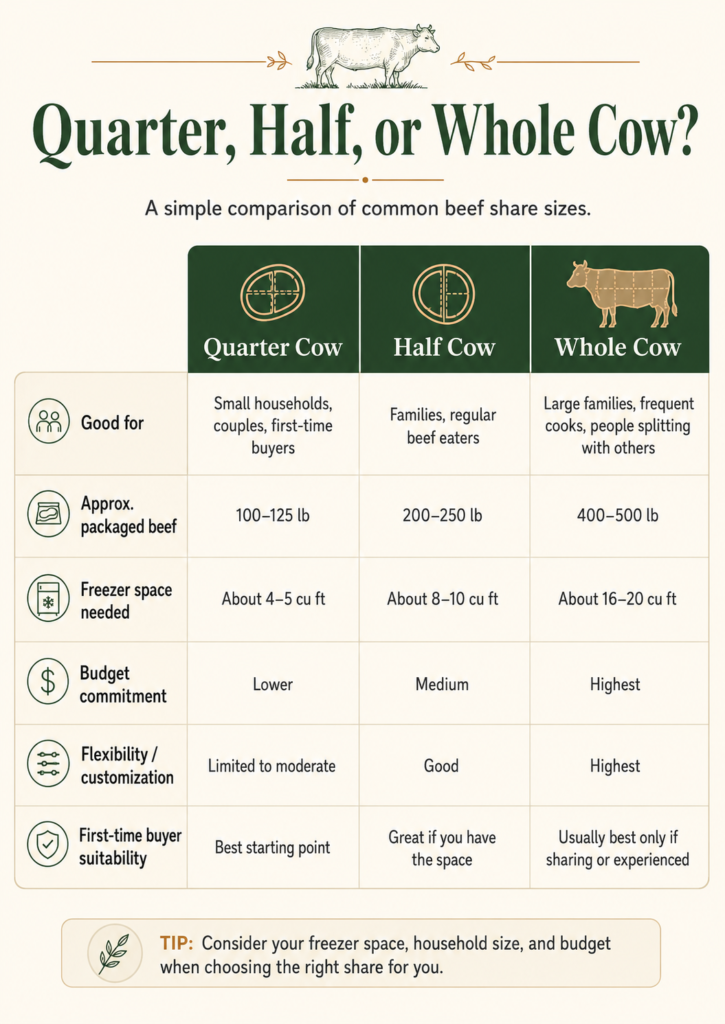
The biggest difference is scale.
Quarter cow
A quarter cow is usually the most approachable entry point for first-time buyers. It gives you a meaningful amount of beef without requiring the freezer space, budget, or commitment of a larger share.
A quarter is often a good fit for:
- smaller households
- first-time beef share buyers
- people who want to try farm-direct buying without going all in
You will still get a mix of cuts, just in smaller quantities.
(Note: Some farms also offer an eighth cow, which can be a good option if you want to try farm-direct beef without committing to a full quarter. Availability varies by farm, so it is worth asking.)
Half cow
A half cow is where beef shares start to feel more substantial. You get more total beef, more variety, and usually more flexibility in how things are cut and packaged.
A half is often a good fit for:
- families
- people who cook at home regularly
- households with dedicated freezer space
- buyers who already know they like farm-direct beef
This is often the point where cut sheet decisions start to matter more.
Whole cow
A whole cow is usually for large families, multiple households splitting an order, or buyers who are very committed to buying in bulk.
A whole is often a good fit for:
- shared family or group purchases
- households with a lot of freezer space
- buyers who want maximum control over how the beef is processed
For most first-time buyers, a whole cow is more than they need.
What do you actually get in a beef share?
This is the part people care about most, and it is also the part with the most variation.
A beef share is not just a box of premium steaks. It is a mix of cuts from across the animal. That usually means some combination of:
- ground beef
- steaks
- roasts
- short ribs
- brisket
- stew meat
- soup bones
- organ meats, if requested
The exact cuts depend on the farm, the butcher, and your cut sheet choices.
That is why it helps to go in with the right mindset. A beef share is not about getting only the most glamorous cuts. It is about getting a fuller, more useful variety of beef that can support a lot of different meals.
And that is usually a good thing.
The “boring” cuts are often the ones that make a share worth having. Ground beef becomes weeknight tacos, burgers, chili, and meatballs. Roasts become low-effort weekend dinners. Bones can become stock. Brisket can become one of the best meals in your freezer if you actually plan for it. A share works best when you value the whole mix, not just the steaks.
How pricing usually works
This is one of the places where first-time buyers get confused, because farms may talk about:
- live weight
- hanging weight
- final packaged weight
- butcher or processing fees
Those are not all the same thing.
In simple terms, you are usually not taking home the same number of pounds that you hear quoted at the earlier stages. Once the animal is processed, trimmed, aged, deboned in some cases, and cut into usable packages, the final take-home amount is lower than the hanging weight.
For example, a half cow might have a hanging weight of around 350 pounds. After processing, trimming, and aging, you might take home somewhere in the range of 200 to 250 pounds of packaged beef. That gap is normal, but it catches a lot of first-time buyers off guard when they see the numbers for the first time.
This is why it is worth slowing down and asking the farm exactly how pricing works. Some farms price by hanging weight. Some include processing in the total. Some separate butcher fees. None of that is automatically a red flag — it just needs to be clearly explained.
What is a cut sheet?
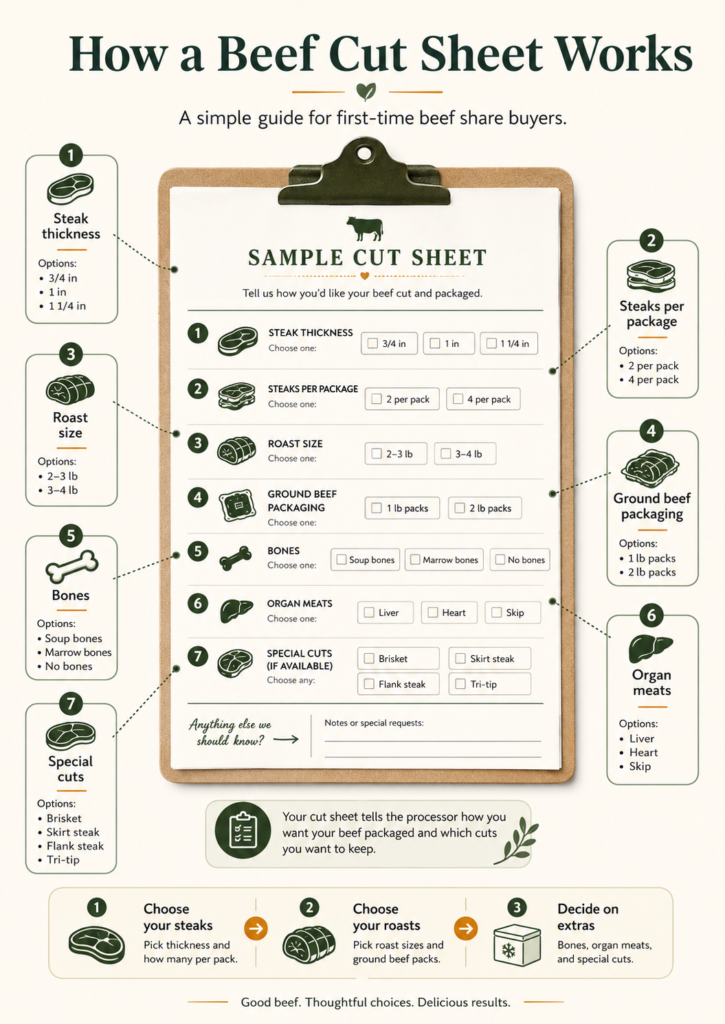
A cut sheet is the form or set of instructions used to tell the butcher how you want your beef processed.
This is where beef shares move from “interesting idea” to “real decision-making.”
A cut sheet may ask things like:
- how thick you want your steaks
- how many steaks per package
- whether you want certain cuts kept whole
- whether you want roasts in smaller or larger sizes
- whether you want bones
- whether you want organ meats
- how much beef you want turned into ground beef
At first glance, it can seem straightforward. In reality, this is where many first-time buyers realize they are making tradeoffs.
Choosing thicker steaks usually means fewer total packages. Keeping a brisket whole means you need the freezer space for it. Asking for more of one cut can reduce what is available to turn into other cuts or uses from that section. If you do not ask for less-common cuts, some may end up in grind by default.
That is not meant to make the process sound stressful. It just means the cut sheet matters more than most people expect.
A few things worth knowing before filling out a cut sheet
You will probably get more ground beef than you expect
Ground beef often makes up a significant part of a quarter or half cow. That is not a sign of lower quality — it reflects the anatomy of the animal and the fact that not every part becomes a premium steak.
Knowing this in advance helps you plan better and appreciate the share for what it is.
The less obvious cuts are often the best value
Flat iron, hanger steak, skirt steak, and tri-tip are all worth asking about. Some are less familiar in grocery-store settings, but they can be some of the most rewarding cuts in a farm-direct purchase.
If you only focus on ribeye and strip steaks, you miss a lot of what makes buying direct worthwhile.
Bones and organ meats deserve a deliberate decision
Some people definitely want them. Some definitely do not. Most first-time buyers just forget to think about them at all.
If you want marrow bones, soup bones, liver, heart, or other organ meats, it is worth asking clearly. If you do not want them, that is completely fine too — but it is better to decide intentionally than to forget they exist.
Your actual cooking habits matter more than aspiration
This may be the most useful rule of all.
If you love the idea of braising but realistically cook mostly burgers, tacos, and quick skillet meals, your cut sheet should reflect that. If you rarely smoke meat, a giant brisket may sound more exciting than it turns out to be. If your family loves grilling, you may want to think carefully about steak thickness and packaging.
A good share should fit your real life, not your fantasy self.
Questions to ask a farm before buying a beef share
A good farm should welcome thoughtful questions. In fact, the willingness to answer them clearly is part of what builds trust.
A few good questions to ask:
- How are the cattle raised?
- Are they grass-fed, grass-finished, grain-finished, or some combination?
- What breeds do they raise?
- How is pricing structured?
- What does your typical quarter or half include?
- How does the cut sheet process work?
- Which butcher or processor do you use?
- How long is the beef aged or hung?
- When will the beef be ready?
- How is pickup handled?
You are not being difficult by asking these questions. You are doing what thoughtful buyers do.
Finding farms that are transparent about these details is part of what makes buying direct worthwhile. It is also part of what platforms like FieldToKitchen are meant to make easier: giving people a clearer view of how farms raise, process, and sell their beef before they commit.
Is buying a beef share worth it?
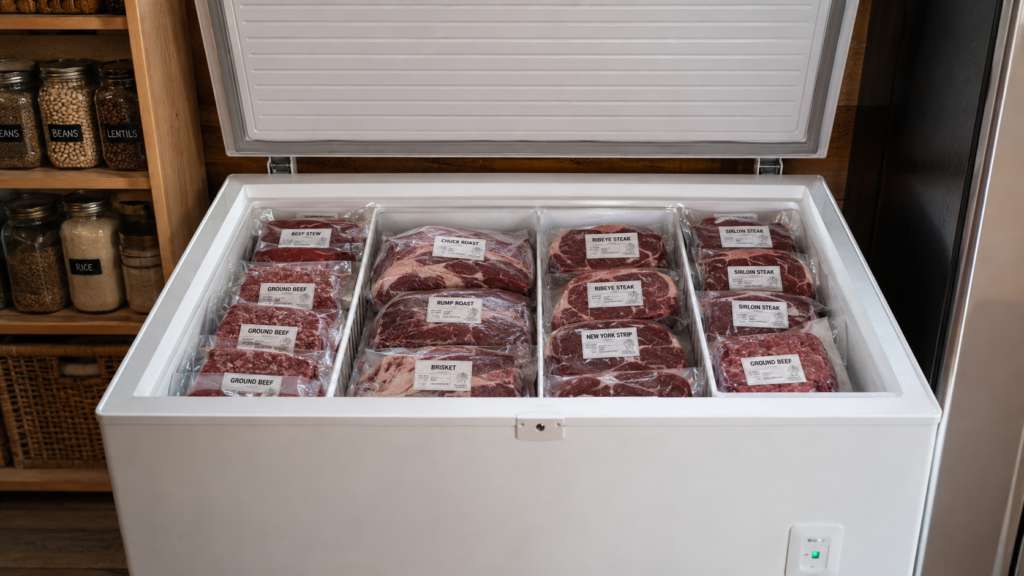
Sometimes yes. Sometimes no.
A beef share can be a great fit if you:
- cook at home regularly
- have freezer space
- like the idea of buying in bulk
- want a closer connection to where your food comes from
- are open to using a wider variety of cuts
It may not be the best fit if you:
- have very limited freezer space
- only want a few premium cuts
- do not cook beef often
- do not want to think about cut sheet decisions
- prefer maximum convenience over bulk planning
There is no need to romanticize it. A beef share is not automatically better just because it comes from a farm. What makes it worthwhile is when the quality, the transparency, and the overall experience actually line up with how you cook and shop. Get that right, and a full freezer of farm-direct beef stops feeling like a commitment and starts feeling like a pretty good decision.