
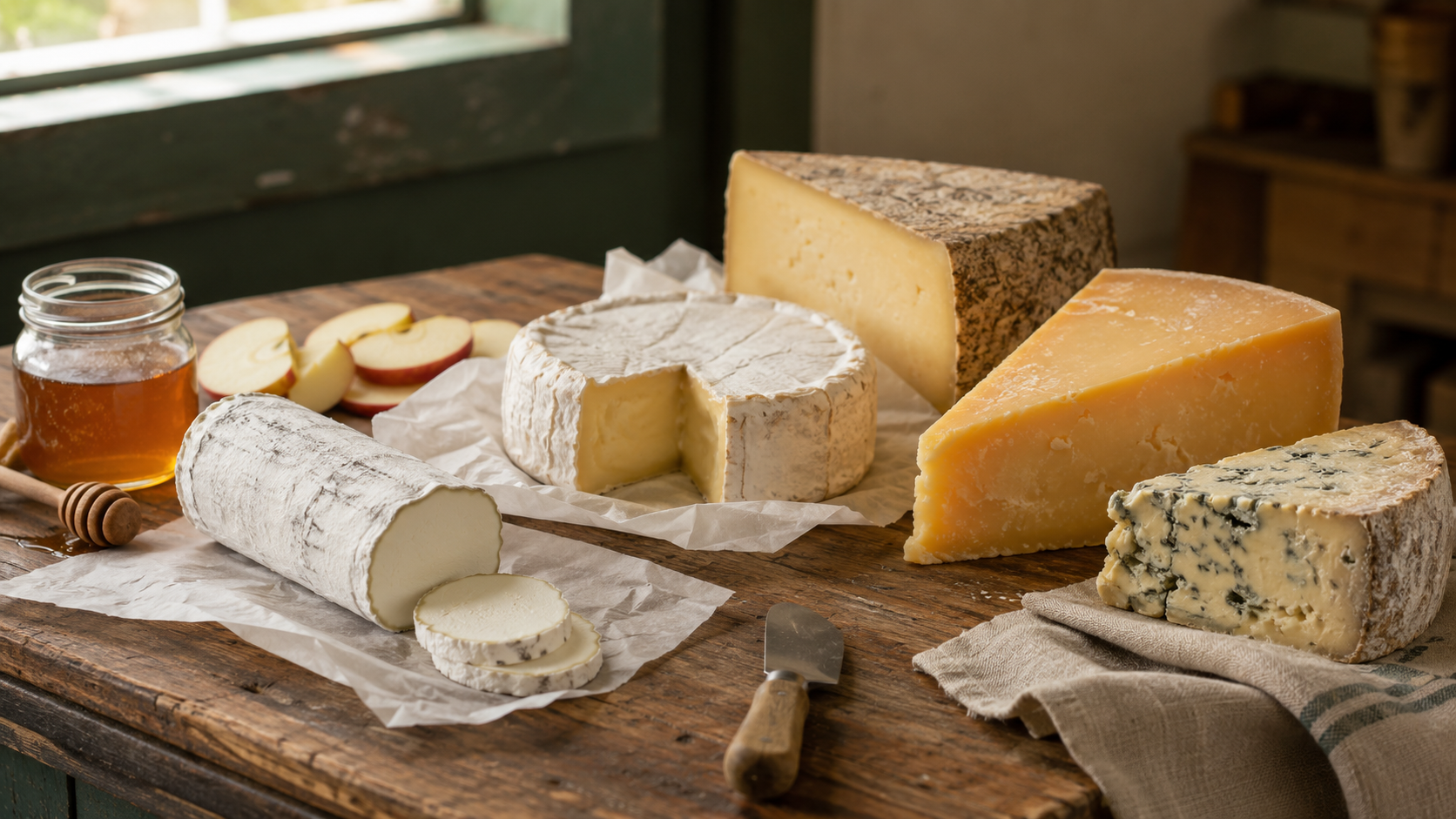
Farm-Direct Cheese: A Beginner’s Guide to What You’ll Find at Local Creameries
Farm-direct cheese is different from what you find in most grocery stores, and not just because it’s local. When cheese is made on the same farm as the milk, from that farm’s own animals, it carries the character of a specific place, a specific herd, and a specific season. That’s what makes it worth seeking out, and it’s also what makes it a little unfamiliar if you’re used to shrink-wrapped blocks from the dairy aisle.
This guide walks through the styles of cheese you’re most likely to encounter from a local creamery or at a farmers market. It’s organized by style and texture, which is how most creameries present their cheese, rather than by country or tradition. For each style, you’ll find what it is, what it tastes like, how to use it, and what to pair it with.
It’s written for people buying cheese directly from farms, so it focuses on the cheeses those farms actually make: fresh chèvre and farmer’s cheese, bloomy-rind rounds, washed-rind stinkers, tommes, aged Alpine wheels, and farm blues. It skips the obscure imports you’re unlikely to meet at a local creamery.
A few things worth understanding before you dive in: what “farmstead” actually means, what different milk types bring to the table, the difference between raw and pasteurized cheese, and why farm cheese is often seasonal. Those concepts come first, then the cheese styles, then pairings and practical knowledge.
Not sure where to start? Start here
If you mostly know supermarket cheese, this table gives you an instant entry point. Find something familiar on the left, and try its farm-direct counterpart on the right.
| If you usually buy… | Try this at the farm… |
|---|---|
| Cream cheese | Fresh farmer’s cheese or herbed spreadable |
| Grocery goat cheese | Fresh farm chèvre (fluffier, brighter) |
| Grocery ricotta | Fresh farm ricotta (a revelation) |
| Brie | A farmstead Camembert or triple cream |
| Block cheddar | A small-batch aged or cloth-bound cheddar |
| Swiss | An Alpine-style wheel (Gruyère or Comté style) |
| Grocery blue cheese | A mild farm blue (gentler and more nuanced) |
| String cheese / deli mozzarella | Fresh-made mozzarella or squeaky curds |
| Grilling in a pan | Halloumi-style grilling cheese |
Understanding farm-direct cheese
What “farmstead” actually means
The word “farmstead” has a specific meaning, and it’s worth knowing because it offers the most direct form of farm-to-cheese traceability.
The American Cheese Society defines farmstead cheese as cheese made from milk from the producer’s own herd or flock, without outside milk, and aged on the same farm where the animals are raised. The cows, goats, or sheep graze the farm’s pastures, and their milk becomes cheese without ever leaving the property. That’s a meaningful distinction. It means full traceability, milk that’s often only hours old when it becomes cheese, and a direct connection between the land, the animals, and what ends up on your plate.
This is different from “artisan” cheese, which refers to small-batch, handmade cheese but where the milk may be sourced from other farms. It’s also different from “creamery” as a general term, which just means a place where dairy is made. A creamery can be farmstead or not.
Why does this matter for you as a buyer? Farmstead cheese tends to reflect its specific place more clearly. The flavor of the pasture, the breed of the animals, and the time of year all show up in the cheese. When you buy farmstead, you’re buying something that genuinely couldn’t be made anywhere else.
Not every excellent farm cheese is technically farmstead. Plenty of wonderful artisan creameries buy milk from a neighbor and make superb cheese. But if a farm makes cheese from its own herd, that’s worth knowing, and it’s usually something the farm is proud to tell you.
Milk types and what they taste like
One of the first things to understand about farm cheese is that the animal matters. Cow, goat, and sheep milk each make distinctly different cheese, and many farms work with more than one.
Cow’s milk is the most familiar. It makes mild, buttery, approachable cheese with a wide range of possibilities, from fresh mozzarella to aged cheddar to creamy Brie. Cow’s milk cheese is usually the easiest entry point if you’re new to farm cheese, and it’s the most versatile across styles.
Goat’s milk makes cheese that’s brighter, tangier, and often described as citrusy or lemony. Fresh goat cheese (chèvre) has a clean, tart snap that’s unmistakable. As goat cheese ages, that tang mellows into something more complex and nutty. Goat’s milk has a different protein and fat structure than cow’s milk, which gives goat cheese its distinctive lighter, cleaner character on the palate.
Sheep’s milk is the richest of the three. It’s high in butterfat and protein, which makes for luxurious, dense, nutty cheese. Sheep’s milk cheeses often taste sweeter and more concentrated. There’s less sheep’s milk cheese made in the US than cow or goat, so when you find a farm making it, it’s usually worth trying.
Mixed milk cheeses blend two or even three milk types. A goat-and-sheep blend, or a cheese that combines all three, can bring together the tang of goat, the richness of sheep, and the body of cow into something more layered than any single milk. These blends are a hallmark of creative farm creameries.
Water buffalo milk is rare in the US but occasionally appears, most often as fresh mozzarella. It’s exceptionally rich and worth trying if you come across it.
If you’re not sure what you like, tasting the same style across different milks (a fresh cow’s milk cheese next to a fresh goat’s milk cheese, for example) is one of the best ways to learn your own palate.
Raw milk vs. pasteurized, and the 60-day rule
This is one of the most common questions about farm cheese, and it’s worth understanding clearly.
Raw milk cheese is made from milk that hasn’t been pasteurized. Pasteurization heats milk to kill bacteria, which improves safety and shelf life but also removes some of the enzymes and microbial complexity that contribute to flavor. Many cheesemakers believe raw milk makes more complex, characterful cheese, especially for aged styles. Raw milk cheese is legal to sell in the US, but with an important condition.
The 60-day rule is a US federal requirement: raw milk cheese must be aged at least 60 days before it can be sold. The aging process, combined with the salt and acidity of the cheese, creates an environment that’s inhospitable to harmful bacteria. This is why you’ll see many aged farm cheeses (tommes, Alpine styles, aged goudas) made with raw milk, but rarely fresh cheeses.
Fresh cheeses are almost always pasteurized because they aren’t aged long enough to meet the 60-day threshold. Fresh chèvre, ricotta, mozzarella, and farmer’s cheese are typically made from pasteurized milk for this reason.
What does this mean for you? For most people, both raw and pasteurized farm cheese are safe and delicious. Raw milk cheese that’s been properly aged and handled is widely enjoyed. That said, people who are pregnant, immunocompromised, very young, or elderly are often advised to be more cautious with raw milk cheese, especially softer styles. If you have questions, ask the farm directly. They’ll know exactly how their cheese is made and can guide you.
Seasonality
Farm cheese is often seasonal, which surprises people used to year-round grocery store availability.
The reason comes down to milk. Animals produce different milk at different times of year, depending on what they’re eating and where they are in their reproductive cycle. Spring and summer milk, when animals graze fresh green pasture, is often richer and more golden, and it makes different cheese than winter milk. Some animals, especially goats and sheep, naturally produce less milk or stop milking entirely in the colder months.
This means a few things in practice. Some cheeses are only available at certain times of year. Fresh cheeses often peak in spring and summer. Certain washed-rind and seasonal specialties appear and disappear. And the same cheese can taste subtly different from season to season, which is a feature, not a flaw. It’s the taste of the farm changing through the year.
If a cheese you loved isn’t available, ask when it will be back. Seasonality is part of what makes farm cheese feel connected to the land.
How to shop at a farm creamery
Farm cheese comes with a person attached, and that’s an advantage. The cheesemaker or the person at the market stall usually knows exactly how each cheese was made and how it’s meant to be enjoyed. A few simple questions turn everything in this guide into practical buying decisions:
Is this made with milk from your own herd, or sourced milk? This tells you whether it’s true farmstead cheese and connects you to the specific animals and land behind it. Either can be excellent, but it’s good to know.
Is it raw-milk or pasteurized? Useful for flavor expectations and for anyone who’s been advised to be cautious with raw milk cheese, especially softer styles.
Is it ready to eat now, or should I let it ripen? Especially important for bloomy and washed-rind cheeses, which can be firm and mild too young and perfect a few days later. The farm can tell you exactly where the cheese is in its life.
Is the rind intended to be eaten? Saves you from either missing out on a delicious rind or chewing on wax. When in doubt, this is the fastest way to know.
Is this cheese seasonal, and when is it at its best? Many farm cheeses shift through the year with the milk. Knowing when something peaks (or when it’ll come back) helps you plan and sets expectations.
You don’t need to ask all five every time. But keeping them in mind turns a farm stand from intimidating into a conversation, and the people making the cheese almost always love to talk about it.
The cheese styles
The rest of this guide is organized by style, moving roughly from fresh and simple to aged and complex. You don’t need to read it in order. Jump to whatever you have in your fridge or whatever caught your eye at the market.
Fresh and brined cheeses
Fresh cheeses are unaged or barely aged. They’re bright, milky, and meant to be eaten young, usually within days or a couple of weeks. This group also includes brined cheeses like feta, which are kept in salt water rather than aged with a rind. These are often the most approachable farm cheeses and a great place to start.
Chèvre / fresh goat cheese
Milk type: Goat (occasionally goat-sheep blend)
What it is: Chèvre is fresh, unaged goat cheese, soft and spreadable, usually sold in logs, tubs, or small rounds. It’s one of the most recognizable farm cheeses and a staple of goat dairies.
Flavor and texture: Bright, tangy, citrusy, and clean, with a creamy, spreadable texture. Fresh chèvre has a characteristic lemony snap that mellows the longer it sits. Good farm chèvre is fluffier and more delicate than the dense supermarket version.
How to use: Spread on crusty bread or crackers, crumble over salads, dollop onto roasted vegetables or pizza, stir into pasta, or whip with honey for a quick dessert. It also works beautifully in both savory and sweet applications because its tang cuts through richness.
Pairings: Honey, fresh or dried figs, beets, walnuts, crusty bread, and crisp white wine or dry cider. The tang loves a touch of sweetness.
Farm-direct note: Fresh chèvre is often a seasonal peak product, best in spring and summer when goats are milking well. Many farms sell it plain or rolled in herbs, ash, or spices. Because it’s fresh, it’s usually pasteurized and meant to be eaten soon after purchase.
Farms that make this: [Dynamic module: farms in the directory offering fresh goat cheese will populate here.]
Fresh farmer’s cheese / spreadable
Milk type: Cow (sometimes goat)
What it is: A fresh, soft, spreadable cheese, often made in a “boursin” style with whole milk. It’s mild, creamy, and frequently sold plain or blended with herbs, garlic, or other flavorings.
Flavor and texture: Mild, milky, and smooth, with a soft spreadable body. Less tangy than chèvre, more like a fresh cream cheese with character. Herbed versions bring in garlic, dill, horseradish, chive, or basil.
How to use: Spread on bread, bagels, or crackers, use as a base for a cheese board, dollop into baked potatoes, or stir into scrambled eggs. The herbed versions make an instant appetizer.
Pairings: Crusty bread, crackers, fresh vegetables, cured meats, and crisp wine or beer. Herbed versions are a meal on their own with good bread.
Farm-direct note: This is one of the most beginner-friendly farm cheeses. It’s approachable, familiar, and versatile. Farms often offer several flavors, so it’s worth trying a couple. Best eaten fresh.
Farms that make this: [Dynamic module.]
Ricotta
Milk type: Cow or goat (sometimes sheep)
What it is: A soft, fresh, slightly sweet cheese made from milk or whey. Farm ricotta is a world away from the grainy tubs at the grocery store: it’s fluffy, creamy, and delicate.
Flavor and texture: Mild, milky, and lightly sweet, with a soft, cloud-like texture. Fresh farm ricotta can be almost dessert-like in its creaminess.
How to use: Spread on toast with honey or olive oil, use in pasta dishes and lasagna, fold into pancakes, dollop onto pizza, or sweeten for cannoli and desserts. It shines both savory and sweet.
Pairings: Honey, olive oil, flaky salt, fresh herbs, tomatoes, crusty bread, and fresh fruit. A drizzle of good honey turns it into dessert.
Farm-direct note: Fresh ricotta is highly perishable and best eaten within days. Some farms make it seasonally or in limited batches. If you’ve only had grocery store ricotta, farm ricotta is a revelation.
Farms that make this: [Dynamic module.]
Feta
Milk type: Sheep, goat, or cow (traditionally sheep or sheep-goat)
What it is: A brined, crumbly fresh cheese, salty and tangy, aged briefly in salt water. Farm feta ranges from mild and creamy to sharp and firm.
Flavor and texture: Salty, tangy, and bright, with a crumbly-to-creamy texture depending on the maker. Sheep’s milk feta is richer; cow’s milk feta is milder.
How to use: Crumble over salads, roast with vegetables, bake into pastries, or serve with olives and bread. Feta holds up to heat and bold flavors.
Pairings: Tomatoes, cucumbers, olives, watermelon, honey, oregano, and crisp wine. A Mediterranean natural.
Farm-direct note: Farm feta varies widely by milk type and brining time, so taste before assuming. A mild “baby feta” is very different from a sharp aged one. Usually sold in brine to keep it fresh.
Farms that make this: [Dynamic module.]
Fresh mozzarella
Milk type: Cow (occasionally water buffalo)
What it is: Fresh, mild, milky cheese that’s been pulled and stretched (the “pasta filata” process) into soft balls or braids. Farm-made fresh mozzarella is tender and delicate, a different thing entirely from the firm low-moisture blocks sold for pizza.
Flavor and texture: Mild, milky, and soft, with a tender, yielding texture and a clean, sweet flavor. Best at room temperature the day it’s made.
How to use: Caprese salad with tomatoes and basil, on pizza, torn over greens, or simply with olive oil and flaky salt. Water buffalo mozzarella, if you find it, is exceptionally rich.
Pairings: Tomatoes, basil, olive oil, flaky salt, balsamic, crusty bread. Simplicity is the point.
Farm-direct note: Fresh mozzarella is best the day it’s made and loses its magic quickly. If a farm makes it fresh, buy it and eat it soon, ideally the same day.
Farms that make this: [Dynamic module.]
Cheese curds
Milk type: Cow
What it is: The fresh, springy pieces of curd formed early in cheesemaking, before they’d otherwise be pressed and aged into cheese. They’re usually sold plain and lightly salted for snacking.
Flavor and texture: Mild, milky, and springy, with the characteristic “squeak” against your teeth when very fresh. That squeak is the sign of a truly fresh curd.
How to use: Eat them out of hand as a snack, use them as the base for poutine, or bread and fry them. They’re also good melted into dishes.
Pairings: Eaten plain, they don’t need much. With poutine, they meet gravy and fries. A cold beer is a natural companion.
Farm-direct note: The squeak fades within a day or two, so curds are at their best the day they’re made. If a farm sells them fresh, that squeak is what you’re paying for. Buy and eat soon.
Farms that make this: [Dynamic module.]
Grilling cheese
Grilling cheese is the outlier in this guide: a firm, salty cheese with a high melting point, designed to hold its shape over direct heat instead of melting into a puddle. It behaves differently from every other cheese here, and it’s genuinely useful in the kitchen.
Halloumi-style grilling cheese
Milk type: Sheep, goat, cow, or a blend
What it is: A firm, salty, springy cheese made to be cooked. Its high melting point means it can go straight onto a grill or into a hot pan, developing a golden, crisp exterior while staying intact and chewy inside. It appears often enough at smaller US creameries and farmers markets to be worth knowing.
Flavor and texture: Salty, milky, and firm, with a distinctive squeaky, springy bite raw and a soft, warm chew once cooked. The flavor is mild but savory, and it takes beautifully to char.
How to use: Slice and grill or pan-fry until golden on both sides, then eat warm. Serve with a squeeze of lemon and herbs, tuck into pita or salads, skewer for the grill, or drizzle with honey for a sweet-salty contrast.
Pairings: Lemon, honey, watermelon, tomatoes, mint, olives, and grilled vegetables. Warm from the pan with a little honey is a revelation.
Farm-direct note: Grilling cheese is a great cook’s cheese and an easy sell for people who think they don’t like “fancy” cheese, since it’s really a warm, savory food. Eat it hot; it firms up and loses its appeal as it cools.
Farms that make this: [Dynamic module.]
Soft-ripened / bloomy rind cheeses
Bloomy-rind cheeses are the ones with the soft, white, velvety coat: Brie, Camembert, and their relatives. That white rind is an edible mold (usually Penicillium candidum) that ripens the cheese from the outside in, turning the interior progressively softer and creamier as it ages. These are some of the most beloved and giftable farm cheeses.
Camembert-style and Brie-style
Milk type: Cow (sometimes goat or mixed)
What it is: Soft-ripened cheeses with a bloomy white rind and a creamy interior. Camembert-style tends to be smaller and more intense; Brie-style is often milder and larger. Farm versions are frequently made in the classic old-world tradition but reflect local milk.
Flavor and texture: Creamy, buttery, and mushroomy, with flavors that deepen as the cheese ripens. Young, the center is firmer and milder. Ripe, it softens to a gooey, spoonable pate that bends at room temperature with rich, earthy, Normandy-style flavors.
How to use: Serve at room temperature with bread and preserves, bake whole until molten, or simply spread on a warm baguette. These are centerpiece cheeses for a board.
Pairings: Jammy preserves, warm crusty baguette, apples, pears, honey, and sparkling wine or dry cider. Fruit preserves are a classic match.
Farm-direct note: Ripeness matters. Ask the farm whether the cheese is ready to eat now or needs a few more days. A bloomy-rind cheese eaten at its peak is a completely different experience from one eaten too young. The rind is edible and part of the experience.
Farms that make this: [Dynamic module.]
Triple cream
Milk type: Cow
What it is: Triple-cream cheeses are soft-ripened cheeses made with added cream, giving them an especially high fat content and a dense, luxurious texture. The American Cheese Society classifies double- and triple-crème cheeses as soft-ripened cheeses made with added cream.
Flavor and texture: Decadent, buttery, rich, and creamy, with a soft, luscious pate through to the center. This is indulgence in cheese form.
How to use: Serve at room temperature with crusty bread and a glass of something celebratory. Triple cream doesn’t need much: let it be the star.
Pairings: Warm crusty baguette, champagne or sparkling cider, fresh berries, and honey. A special-occasion cheese.
Farm-direct note: Triple cream is rich enough that a little goes a long way. It’s often cave-aged for several weeks and wrapped in breathable paper. Bring it fully to room temperature before serving to experience its texture at its best.
Farms that make this: [Dynamic module.]
Ash-coated and soft-ripened cheeses
Milk type: Cow or goat
What it is: Soft-ripened cheeses that include a distinctive layer of edible ash, often beneath a bloomy white rind. Ash is a surface treatment that can appear across several styles, historically used to help ripening and protect the cheese, and today prized for the striking dark line it leaves in the cross-section. A Chaource-style cheese is one classic example, ripening gradually from the outside in.
Flavor and texture: In youth, tart and firm with a fresh, chèvre-like or chalky center. As it ripens from the outside in, the pate sweetens and softens, becoming more delicate and creamy. The ash line gives a striking cross-section.
How to use: Serve at room temperature and let the contrast between the ripened edge and firmer center shine. Beautiful on a board for its appearance alone.
Pairings: Salted almonds, honey, crusty bread, and crisp white wine. The tang and sweetness balance beautifully with nuts and honey.
Farm-direct note: These cheeses change dramatically as they age, so ask where in its life the cheese is. A young one and a ripe one are almost different cheeses. The ash is edible and traditional.
Farms that make this: [Dynamic module.]
Washed-rind cheeses
Washed-rind cheeses are the “stinky” ones, and they’re worth getting past the smell. During aging, these cheeses are repeatedly washed with brine, and often beer, wine, cider, or spirits. This washing encourages a community of surface microbes, often including bacteria associated with the characteristic orange color and savory aroma. The result is these cheeses’ distinctive rind, pungent smell, and deep, savory flavor. The smell is much stronger than the taste.
Washed-rind / monastic style
Milk type: Cow (sometimes goat or sheep)
What it is: A soft to semi-soft cheese washed repeatedly during aging with brine and often cider, beer, or wine. This places it in the family of washed-rind or “monastic” cheeses, a tradition dating back to European monasteries. The washing encourages surface microbes that give the rind its characteristic orange-red color and savory aroma.
Flavor and texture: Aromatic and pungent on the nose, but the flavor is savory, sweet, and earthy, with a funk that’s balanced rather than overwhelming. The texture ranges from supple to gooey depending on ripeness. As these cheeses age, their sweetness develops alongside the earthy funk.
How to use: Serve at room temperature with hearty bread. These are cheeses for people who want bold flavor, and they convert skeptics more often than you’d expect. The aroma dissipates; the flavor rewards.
Pairings: Dark beer, hard cider, robust bread, cured meats, and pickles. The funk stands up to strong drinks. Cider is an especially good match, particularly when the cheese was washed in cider.
Farm-direct note: Washed-rind cheeses are often seasonal and made in smaller batches. Don’t be put off by the smell: the taste is milder and more rewarding than the aroma suggests. If you’re nervous, ask the farm for a taste. The rind is edible.
Farms that make this: [Dynamic module.]
Semi-firm cheeses and tommes
Semi-firm cheeses are the everyday workhorses of a cheese board: firm enough to slice, mild to medium in flavor, and endlessly versatile. Tommes, in particular, are a farmhouse tradition, typically round wheels with natural rinds and nutty, approachable flavor. This category includes some of the most useful cheeses a farm can make.
Tomme-style
Milk type: Cow, goat, sheep, or mixed
What it is: A classic farmhouse cheese, usually a round wheel with a natural, rustic rind, aged a few months. Tomme is a broad old-world tradition (especially French Alpine) that farm creameries adapt with local milk. The rind is often washed early in aging to encourage beneficial yeasts and molds.
Flavor and texture: Nutty, mellow, and savory, with a firm but pliant interior. Tommes often have a “cheddary” sharpness underscored by earthy, mushroomy notes from the natural rind. Approachable but complex.
How to use: Slice for a cheese board, melt into sandwiches, grate over dishes, or eat with fruit. Tomme is one of the most versatile farm cheeses for everyday eating.
Pairings: Sweet, wet fruits like apples and pears, nuts, cured meats, and cider or medium-bodied wine. Local apples are a natural match.
Farm-direct note: Tomme is often a farm’s flagship everyday cheese: reliable, versatile, and food-friendly. The natural rind is usually edible, though rustic. Ask if you’re unsure.
Farms that make this: [Dynamic module.]
Gouda-style and other approachable semi-firm cheeses
Milk type: Cow (sometimes goat)
What it is: A family of smooth, semi-firm, approachable cheeses. Gouda-style cheeses (including raw-milk aged versions) are buttery and mellow when young, deepening with age. Related crowd-pleasers you may see include Havarti (soft, buttery, mild), Colby and Jack (mild and sliceable), and Caerphilly (semi-firm with a buttery, slightly crumbly texture).
Flavor and texture: Generally mild, buttery, and smooth, with a semi-firm sliceable body. Aged versions develop caramel and butterscotch notes. Younger versions are gentle crowd-pleasers.
How to use: Slice for sandwiches and boards, melt into grilled cheese, or snack out of hand. These are the family-friendly farm cheeses that even picky eaters enjoy.
Pairings: Apples, pears, crackers, mustard, cured meats, beer, and cider. Aged gouda loves dried fruit and a robust beer.
Farm-direct note: Semi-firm cheeses are often the most versatile and family-friendly options a farm offers. If you’re introducing farm cheese to skeptics, start here. Aging level makes a big difference, so ask how long it’s aged if you want a specific flavor.
Farms that make this: [Dynamic module.]
Firm and aged cheeses
Firm, aged cheeses are aged the longest, often six months to well over a year. Time concentrates their flavor, firms their texture, and develops the crunchy little crystals (natural protein or mineral crystals) that signal a well-aged cheese. These are the cheeses for slow snacking, grating, and pairing with big flavors.
Alpine-style
Milk type: Cow
What it is: Aged, firm, full-flavored cheese in the tradition of the mountain cheeses of the Alps (think Gruyère and Comté). Farm Alpine-style cheeses are typically aged six to eight months or more, with a natural or washed rind and a darker, richer interior.
Flavor and texture: Full-bodied and complex, with flavors of nuts, caramel, and umami. The pate is smooth and firm, and the oldest wheels develop small holes and crunchy natural crystals (protein or mineral crystals such as tyrosine or calcium lactate). Broad appeal with real depth.
How to use: Slice for boards, melt into fondue and gratins, grate over pasta, or eat in chunks with fruit and nuts. Alpine cheeses are legendary melters.
Pairings: Dried fruit, nuts, cured meats, apples, robust red wine, and dark beer. A cheese that stands up to bold accompaniments.
Farm-direct note: Look for the crunchy crystals in older wheels: these natural protein or mineral crystals are a sign of proper aging, not a flaw. Alpine-style cheeses are among the most impressive things a farm can make, and they reward slow eating. The rind is usually edible.
Farms that make this: [Dynamic module.]
Cheddar and cheddar-style
Milk type: Cow
What it is: Firm, aged cheese made by the cheddaring process, ranging from mild to sharp depending on age. Farm cheddars and cheddar-style cheeses (including traditional British styles like Dunlop) are a world apart from block supermarket cheddar.
Flavor and texture: Sharp, savory, and firm, with flavors deepening and crystallizing with age. Young cheddar is mellow and smooth; aged cheddar is sharp, crumbly, and complex.
How to use: Slice for sandwiches, melt into everything, grate over dishes, or eat with apples and crackers. The most universally useful aged cheese.
Pairings: Apples, chutney, mustard, cured meats, crusty bread, robust beer, and cider. An apple and a sharp cheddar is a perfect two-ingredient snack.
Farm-direct note: Farm cheddar is often made in small batches and aged with more character than commodity cheddar. Ask about the age: it tells you a lot about the flavor. Some are cloth-bound with a natural rind rather than waxed.
Farms that make this: [Dynamic module.]
Blue cheeses
Blue cheeses get their character from Penicillium molds that create the blue-green veining and the sharp, peppery, tangy flavor. Farm blues range from mild and creamy to intense and crumbly. Even if you think you don’t like blue cheese, a mild farm blue is worth a try: they’re often gentler and more nuanced than the aggressive supermarket versions.
Blue-veined and surface-ripened blue
Milk type: Cow, goat, or sheep
What it is: Cheeses with blue-green mold, either veined throughout the interior (classic blue) or ripened with blue-grey mold on the surface. Interior blues are pierced during aging to let air create the veining; surface-ripened blues develop a fine coat of blue-grey mold as they age over several weeks.
Flavor and texture: Ranges widely. Mild farm blues are creamy, tangy, and gentle; intense ones are sharp, peppery, salty, and crumbly. Surface-ripened versions add complexity to a younger cheese’s tang. Sheep’s milk blues are especially rich.
How to use: Crumble over salads, melt into sauces, pair with steak, or serve on a board with honey and fruit. Blue cheese loves contrast with sweet and rich foods.
Pairings: Honey, figs, pears, walnuts, dark chocolate, port, and robust red wine. The classic move is blue cheese with honey: the sweetness tames the funk.
Farm-direct note: Farm blues are often milder and more nuanced than commodity blue cheese. If you think you don’t like blue, ask the farm for their gentlest one. Milk type matters a lot here, so a sheep or goat blue may surprise you.
Farms that make this: [Dynamic module.]
Pairings
Cheese doesn’t need rules to be enjoyed, but a few simple guidelines make farm cheese even better. The core idea: match intensity, and use contrast. Sweet cuts salt, acid cuts richness, and crunch complements creaminess.
A simple pairing framework
Here’s a quick guide to what works with each style:
Fresh cheeses (chèvre, ricotta, farmer’s cheese): honey, fresh and dried fruit, fresh herbs, olive oil, crusty bread, and crisp white wine or dry cider. The clean, tangy flavors love a little sweetness and good bread.
Bloomy-rind cheeses (Camembert, Brie, triple cream): jammy preserves, warm baguette, apples, pears, honey, and sparkling wine or dry cider. Fruit preserves are the classic partner.
Washed-rind cheeses (the stinky ones): dark beer, hard cider, robust bread, cured meats, and pickles. Bold drinks stand up to the funk.
Tommes and semi-firm cheeses: apples, pears, nuts, cured meats, and cider or medium-bodied wine. Sweet, crisp fruit is a natural match.
Firm and aged cheeses (Alpine, cheddar): dried fruit, nuts, chutney, mustard, robust red wine, and dark beer. These cheeses can handle strong, concentrated flavors.
Blue cheeses: honey, figs, pears, walnuts, dark chocolate, and port or robust red. Sweetness is the key to taming the sharpness.
Building a simple farm-direct cheese board
You don’t need a dozen cheeses for a great board. A simple, effective approach is to pick one cheese from a few different categories to give a range of textures and intensities:
Start with something fresh and mild (a chèvre or farmer’s cheese), add something soft and rich (a bloomy-rind round), include something firm and aged (a tomme or aged cheddar), and if your crowd is adventurous, add something bold (a washed rind or a blue). Three to five cheeses is plenty for most gatherings.
Round it out with local accompaniments: honey, fruit preserves or jam, fresh and dried fruit, nuts, cured meats, good bread, and crackers. Buying these from the same farms and markets keeps the whole board local and often better-tasting.
For quantities, plan on roughly one to two ounces of each cheese per person if it’s an appetizer, more if the board is the meal. And always let the cheese come to room temperature before serving.
Cider and cheese
If there’s one beverage pairing worth highlighting for farm-direct cheese, it’s cider. Hard cider, especially the drier farm-made and Hudson Valley styles, pairs remarkably well across nearly every cheese category. Its acidity cuts through rich, creamy cheeses, its fruit complements nutty aged cheeses, and its funk-friendly character stands up to washed rinds. Many washed-rind cheeses are even washed in cider during aging, making the pairing especially natural.
Cider is also a natural fit for the farm-direct table more broadly. If you’re buying cheese from a local creamery, there’s a good chance a local cidery isn’t far away, and the two make a perfect pairing for a genuinely local spread.
Practical cheese knowledge
A few practical things make a real difference in how much you enjoy farm cheese.
Serving temperature
Cold cheese is muted cheese. Refrigeration dulls flavor and firms up texture, so cheese eaten straight from the fridge tastes like a fraction of itself.
Let cheese come to room temperature before serving, which usually takes 30 to 60 minutes depending on size and type. This is especially important for soft-ripened and bloomy-rind cheeses, which only reach their full gooey, aromatic potential when warm. A ripe Camembert at room temperature bends and spreads; the same cheese cold is firm and bland. Take your cheese out well before guests arrive. One safety note: return perishable leftovers to the refrigerator within two hours, or sooner in hot outdoor conditions.
Storage
Farm cheese is alive and needs to breathe, which makes storage a little different from wrapping a block in plastic.
Ideally, store cheese in cheese paper (specialized two-layer paper that lets the cheese breathe while retaining some moisture) or in loosely wrapped parchment or wax paper. Tight plastic wrap can suffocate cheese and trap moisture, leading to off flavors, especially with bloomy and washed-rind styles. If plastic is all you have, wrap loosely and change it periodically.
Fresh cheeses (chèvre, ricotta, mozzarella) are the most perishable and should be eaten within days, kept in their container or brine. Aged cheeses last longer and are more forgiving. Keep cheese in the warmer part of the fridge (often a vegetable drawer) rather than the coldest spot.
The rind question: what to eat and what to skip
A common question: can you eat the rind?
Many rinds are edible, but edibility and pleasantness are different questions. Natural, bloomy, and washed rinds are generally edible. The white bloomy rind on Camembert and Brie is edible and flavorful. The orange washed rind on stinky cheeses is edible and adds savory depth. The natural rustic rinds on tommes and aged cheeses are usually edible, though they can be firm or earthy, so it’s a matter of preference.
Skip wax and cloth. Waxed rinds (often on gouda and some cheddars) and cloth bindings are not meant to be eaten. Peel or cut them away.
If you’re ever unsure, ask the cheesemaker whether the rind is intended to be eaten. When in doubt, taste a small bit: your palate will tell you whether it belongs in the bite.
Cutting cheese properly
How you cut cheese matters more for sharing than you’d think, because the goal is to give everyone a fair share of the flavorful center and the character-rich rind.
For a wedge (like a wedge of Brie or tomme), cut lengthwise from the center point outward, so each slice has both the tip and the rind. Don’t just lop off the tip, which leaves others with all rind. For a round, cut into wedges like a pie. For a log of chèvre, slice into rounds (a bit of dental floss or a thin wire cuts soft cheese cleanly). For a hard aged cheese, break or shave into rustic chunks rather than neat slices.
None of this is precious. The point is just to share the good parts around.
Quick reference
Style-to-pairing chart
| Cheese style | Milk types | Flavor | Best pairings |
|---|---|---|---|
| Fresh (chèvre, ricotta, farmer’s) | Goat, cow | Bright, tangy, milky | Honey, fruit, herbs, crusty bread |
| Bloomy rind (Brie, Camembert, triple cream) | Cow, goat | Creamy, buttery, mushroomy | Jammy preserves, baguette, sparkling cider |
| Washed rind (stinky) | Cow, goat, sheep | Pungent aroma, savory taste | Dark beer, hard cider, hearty bread |
| Tomme / semi-firm | All | Nutty, mellow, versatile | Apples, pears, nuts, cider |
| Firm / aged (Alpine, cheddar) | Cow | Concentrated, nutty, sharp | Dried fruit, nuts, robust reds |
| Blue | Cow, goat, sheep | Sharp, tangy, peppery | Honey, figs, port, walnuts |
Milk-type flavor chart
| Milk | Character | Good to know |
|---|---|---|
| Cow | Mild, buttery, versatile | Most familiar and food-friendly; works across all styles |
| Goat | Bright, tangy, citrusy | Cleaner, lighter feel; distinctive fresh tang |
| Sheep | Rich, nutty, high butterfat | The most luxurious; less common, worth seeking out |
| Mixed | Layered and complex | Blends bring together the strengths of each milk |
Farm-direct cheese rewards a little curiosity. You don’t need to know everything to enjoy it. Start with a style that sounds good, ask the farm questions (they love to talk about their cheese), let it come to room temperature, and pair it with something local and simple. The more you taste, the more you’ll learn what a specific farm, a specific herd, and a specific season can put into something as simple and ancient as cheese.