
Best Cuts of Steak Explained: Ribeye, NY Strip and More
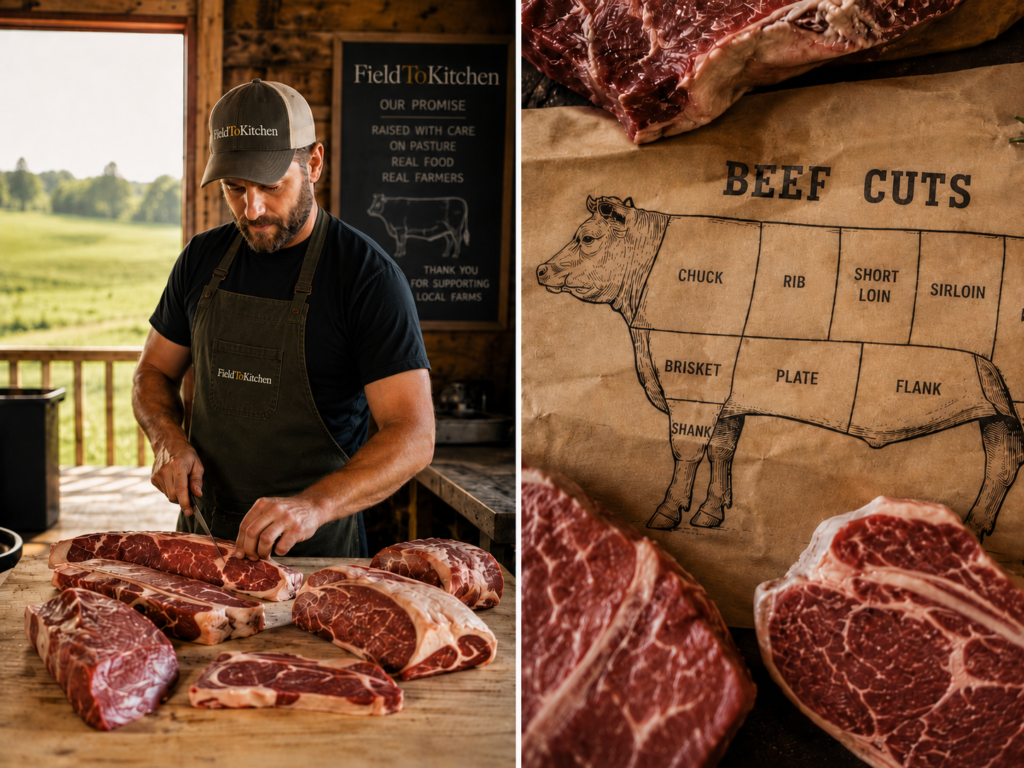
If you have ever stood in front of a meat case wondering whether to buy ribeye, New York strip, sirloin, or flank steak, you are not alone. A lot of the confusion comes down to one simple fact: different steak cuts come from different parts of the cow, and that changes how tender they are, how much marbling they have, and how they cook. USDA’s beef-cut standards distinguish the major primal and subprimal sections, and beef industry cut guides map familiar steaks like ribeye, strip steak, filet, flank, and tri-tip back to those sections.
For home cooks, understanding steak cuts is useful for two reasons. First, it helps you buy more confidently, whether you are shopping at a grocery store, butcher shop, or directly from a farm. Second, it helps you cook better, because a richly marbled steak from the rib wants different treatment than a lean, coarse-grained cut like flank.
And if you are buying beef in bulk from a local farm, this matters even more. The exact steaks you receive often depend on how the carcass is broken down and on the cut sheet you choose, so knowing the basics helps you make better decisions before the meat is wrapped and labeled.
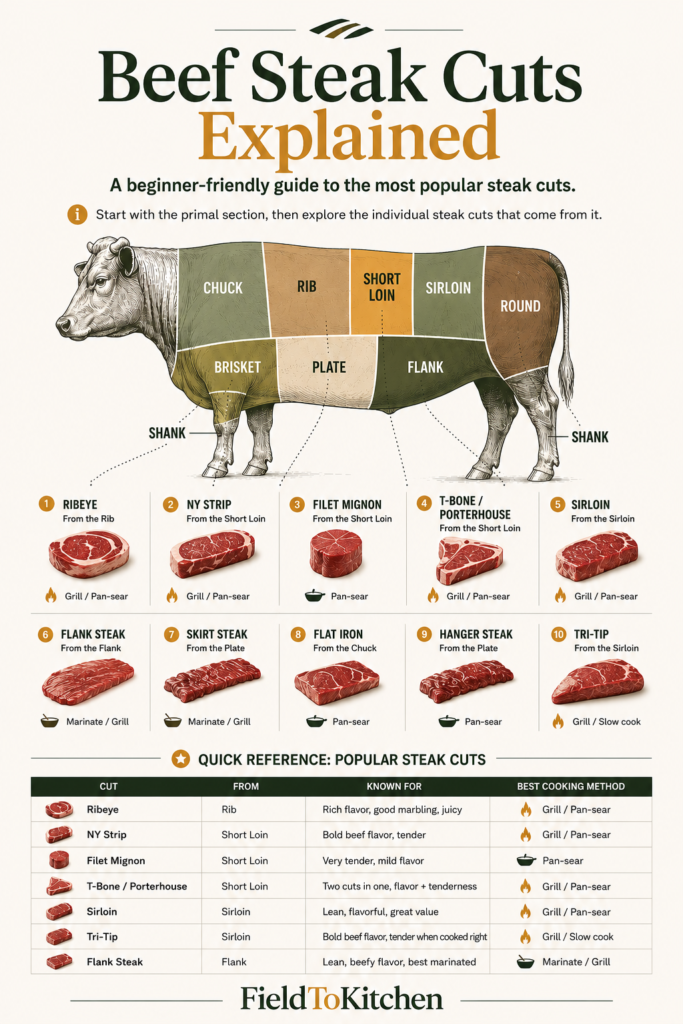
The big picture: where steak cuts come from
At the broadest level, beef is divided into major sections called primals. For steak buyers, the most important ones are chuck, rib, short loin, sirloin, flank, plate, and round. In simple terms, the muscles that do less work tend to be more tender, while harder-working areas tend to be leaner, chewier, and often more flavorful. USDA’s beef specifications define these primal and subprimal cuts, and common retail steaks are fabricated from them.
A practical way to think about it:
- Rib and short loin: home to many classic steakhouse cuts
- Sirloin: a balance of flavor, value, and versatility
- Flank and plate: flavorful cuts that often benefit from marinating and slicing
- Chuck: usually tougher overall, but it yields a few excellent “butcher’s cuts”
- Round: leaner and often better for roasting, slicing thin, or marinating than for classic steakhouse treatment
Popular steak cuts, explained
Ribeye
Where it comes from: the rib section. USDA market reports and beef cut references list ribeye under rib subprimals.
What it is known for: rich beef flavor, generous marbling, and a juicy texture. Ribeye is one of the easiest cuts to love because the fat does a lot of the work for you. Well-rendered marbling helps keep the steak tender and flavorful.
Tenderness: high
Best cooking methods: grilling, pan-searing, skillet-to-oven, broiling. Ribeye is forgiving compared with leaner steaks because the marbling helps protect it from drying out.
Best for: people who want bold flavor and a classic steakhouse experience
New York Strip
Where it comes from: the short loin. Beef cut references classify strip steak in the loin/short loin family.
What it is known for: a firm but tender bite, strong beef flavor, and less fat than ribeye. If ribeye is the richer, more indulgent option, strip steak is often the cleaner, more structured one.
Tenderness: high, though usually not as soft as filet
Best cooking methods: grilling, pan-searing, broiling. It performs especially well when cooked over high heat and rested properly before slicing.
Best for: someone who wants a classic steak with a good mix of tenderness and beefy flavor
Filet Mignon / Tenderloin
Where it comes from: the tenderloin area of the loin. Tenderloin is widely recognized as one of the most tender beef cuts. Beef-focused grilling collections include tenderloin among the top cuts for grilling.
What it is known for: exceptional tenderness and a milder flavor than ribeye or strip. Filet is about texture more than aggressive beefiness.
Tenderness: very high
Best cooking methods: pan-searing, grilling, skillet-to-oven. Because it is leaner than ribeye, it benefits from careful cooking and is often paired with butter or a pan sauce.
Best for: people who prioritize tenderness above all else
T-Bone and Porterhouse
Where they come from: the short loin. These cuts combine strip steak on one side of the bone and tenderloin on the other. Beef grilling collections include T-bone among top grilling steaks.
What they are known for: the appeal of getting two textures in one steak. The strip side brings beefier flavor; the tenderloin side brings tenderness.
Tenderness: high
Best cooking methods: grilling, broiling, pan-searing with enough pan space. Because these cuts include two muscles, they can cook a bit unevenly, so careful heat management matters.
Best for: people who want a dramatic, steakhouse-style cut
Quick note: Porterhouse and T-bone are closely related. In general, porterhouse is cut from the rear of the short loin and has a larger tenderloin section.
Sirloin
Where it comes from: the sirloin primal. Beef cut references divide sirloin into top and bottom sirloin, with top sirloin producing popular grilling steaks and bottom sirloin producing cuts like tri-tip and sirloin bavette.
What it is known for: a good balance of flavor, value, and leanness. Sirloin usually does not have the lush marbling of ribeye, but it is often more affordable and still satisfying.
Tenderness: moderate to fairly high, depending on the exact sirloin cut
Best cooking methods: grilling, broiling, pan-searing. Top sirloin is especially popular for grilling.
Best for: buyers who want a versatile steak that feels like a good value
Flank Steak
Where it comes from: the flank. Beef cut references describe flank steak as lean, boneless, and intensely beefy.
What it is known for: strong flavor and a pronounced grain. Flank is usually not a “cut it with a butter knife” steak. It shines when marinated, grilled quickly, and sliced thin against the grain.
Tenderness: moderate to lower than steakhouse cuts
Best cooking methods: marinating, grilling, stir-frying. Beef cut guidance explicitly notes marinating and slicing against the grain as especially important for flank.
Best for: fajitas, steak salads, sandwiches, and people who care more about flavor than steakhouse tenderness
Skirt Steak
Where it comes from: the plate. Like flank, skirt is known for big flavor and a looser grain.
What it is known for: intense beefiness and excellent performance in high-heat cooking. Skirt is a favorite for fajitas and fast weeknight meals.
Tenderness: moderate, but texture can be chewy if overcooked or sliced incorrectly
Best cooking methods: marinating, quick grilling, searing. Like flank, it is best when cooked hot and fast and sliced thin against the grain. General beef cut guidance groups these flavorful thinner cuts with grill- and skillet-friendly methods.
Best for: tacos, fajitas, rice bowls, and anyone who loves deeply beefy flavor
Flat Iron
Where it comes from: the chuck, specifically the top blade. Beef cut references describe flat iron as extremely tender, well marbled, and flavorful.
What it is known for: being one of the best value steaks if you want tenderness without paying ribeye or tenderloin prices.
Tenderness: high for a chuck-derived cut
Best cooking methods: grilling, skillet cooking, stir-fry, broiling.
Best for: people who want a less obvious cut that still delivers tenderness and flavor
Hanger Steak
Where it comes from: the plate/diaphragm area
What it is known for: rich, almost minerally beef flavor and a looser texture. Hanger is sometimes described as a butcher’s favorite because it packs a lot of character.
Tenderness: moderate, but more tender than many people expect if cooked and sliced well
Best cooking methods: quick searing, grilling, slicing against the grain
Best for: readers who want something more distinctive than strip or sirloin
Tri-Tip
Where it comes from: bottom sirloin, not the round. Beef cut references are clear that bottom sirloin includes tri-tip.
What it is known for: robust beef flavor, a triangular shape, and flexibility. Tri-tip can be roasted whole or cut into steaks, depending on how it is fabricated.
Tenderness: moderate to fairly high
Best cooking methods: roasting, grilling, reverse searing. Beef cut guidance notes that bottom sirloin cuts like tri-tip are good for roasting or grilling.
Best for: people who want great flavor and something a little different from the usual steakhouse lineup
Comparison table: popular steak cuts at a glance
| Cut | From | Tenderness | Flavor | Best cooking methods |
|---|---|---|---|---|
| Ribeye | Rib | High | Rich, juicy, well-marbled | Grill, pan-sear, broil |
| NY Strip | Short loin | High | Beefy, balanced | Grill, pan-sear, broil |
| Filet Mignon | Tenderloin/loin | Very high | Mild, buttery | Pan-sear, grill |
| T-Bone / Porterhouse | Short loin | High | Combines strip flavor with tenderloin tenderness | Grill, broil |
| Sirloin | Sirloin | Moderate to fairly high | Leaner, flavorful, good value | Grill, pan-sear |
| Flank Steak | Flank | Moderate | Lean, intensely beefy | Marinate, grill, slice thin |
| Skirt Steak | Plate | Moderate | Very beefy, loose grain | Marinate, grill, sear |
| Flat Iron | Chuck/top blade | High | Tender, flavorful, well-marbled | Grill, skillet, broil |
| Hanger Steak | Plate | Moderate | Deep, distinctive beef flavor | Sear, grill |
| Tri-Tip | Bottom sirloin | Moderate to fairly high | Robust, versatile | Roast, grill |
The exact eating experience still varies by grade, thickness, and how the steak is cut, but this is a good practical framework for comparison. USDA and beef industry references consistently distinguish primal and subprimal origins this way.
Premium cuts vs. value cuts
If you are trying to choose between “special occasion” steaks and “smart everyday” steaks, here is a simple way to think about it.
Premium cuts usually include:
- Ribeye
- Filet Mignon
- NY Strip
- Porterhouse / T-Bone
These cuts are popular because they are naturally tender and easy to cook well. They tend to come from less-worked muscles and often carry a higher price because demand is strong. Beef consumer guides and grilling collections consistently center these cuts as favorites.
Better-value cuts often include:
- Sirloin
- Flat Iron
- Flank Steak
- Skirt Steak
- Tri-Tip
- Hanger Steak
These cuts may ask for a little more technique, like marinating, slicing against the grain, or cooking to a specific doneness, but they can be excellent choices if you want flavor and value without always paying ribeye prices.
Best steak cuts for grilling
If your main goal is grilling, start here:
- Ribeye for rich flavor and forgiving marbling
- NY Strip for a classic steakhouse-style grill steak
- Top Sirloin for a more budget-friendly option
- T-Bone / Porterhouse for a special-occasion cut
- Flat Iron if you want a less obvious but very rewarding choice
Beef-focused grilling collections specifically highlight T-bone, tenderloin, top sirloin, flat iron, and strip steak among strong grilling options.
For thinner, more flavorful cuts like flank and skirt, grilling is also a great choice, but these usually benefit from marinating and careful slicing more than thick steakhouse cuts do.
Best steak cuts for beginners
If you are newer to cooking steak at home, these are the easiest places to start:
Ribeye
The marbling gives you a little margin for error.
NY Strip
Very classic, easy to understand, and cooks well with simple methods.
Sirloin
A good middle-ground cut that is usually easier on the budget.
Flat Iron
Great if you want something tender and flavorful without choosing the most expensive option.
If you are just starting out, flank, skirt, and hanger can still be excellent, but they reward technique more. They are not necessarily harder to cook — just less forgiving if you overcook them or slice them the wrong way.
Best affordable steak cuts
If you want the most steak satisfaction for your money, these are usually worth a look:
- Sirloin
- Flat Iron
- Flank Steak
- Skirt Steak
- Tri-Tip
- Hanger Steak
These cuts often deliver plenty of flavor, and some — especially flat iron — can feel surprisingly premium once cooked properly. Beef cut references also position flat iron as especially tender and flavorful, which is a big reason it is such a good “value” recommendation.
What this means if you are buying beef from a farm
If you buy beef directly from a local farm, understanding cuts becomes even more useful. Instead of only choosing between what is prepackaged in a store, you may be deciding how to allocate steaks, roasts, ground beef, short ribs, soup bones, brisket, and other cuts across a quarter, half, or whole animal. USDA’s boxed-beef cutout guide explains that when subprimals are fabricated from primals, the original section produces not only the featured cut but also additional components and credit items, which is one reason cut-sheet choices matter.
That means knowing the difference between ribeye and strip steak is useful, but so is knowing whether you want:
- more steaks versus more roasts
- thicker steaks versus more total packages
- trim for ground beef
- bones or organ meats
- specialty cuts like flank, skirt, or tri-tip
In other words, steak education is not just trivia. It helps you buy better.
Final thoughts
The best steak cut is not the same for everyone. If you want maximum tenderness, filet mignon is hard to beat. If you want richness and marbling, ribeye is the classic answer. If you want a balanced steakhouse cut, New York strip is a strong choice. If you want value, sirloin and flat iron deserve a look. And if you care most about bold flavor, flank, skirt, and hanger may end up being your favorites. Those broad distinctions line up with how beef cut guides describe the main cuts and their best uses.
Once you understand where steak cuts come from and how they behave in the pan or on the grill, shopping gets a lot less confusing — and a lot more interesting.
FAQ
What is the most tender steak cut?
Filet mignon, which comes from the tenderloin, is generally considered the most tender widely available steak cut. Grilling collections and beef cut guides consistently place tenderloin among premium, tender cuts.
What is the most flavorful steak cut?
Many people would say ribeye because of its generous marbling and rich beef flavor. That said, “most flavorful” is subjective, and some people prefer the stronger, looser-textured flavor of skirt or hanger steak. Beef cut references specifically describe flank as having lots of intense beef flavor, which helps explain why leaner cuts still have devoted fans.
What is the difference between ribeye and New York strip?
Ribeye comes from the rib and is usually richer and more marbled. New York strip comes from the short loin and is typically a little firmer, a little leaner, and still very flavorful.
What is the difference between T-bone and porterhouse?
They come from the same general short-loin area, but porterhouse usually has a larger tenderloin section. Both give you strip steak on one side of the bone and tenderloin on the other.
What are the best affordable steak cuts?
Sirloin, flat iron, flank, skirt, tri-tip, and hanger are all strong value candidates, especially if you know how to cook them well. Flat iron stands out because beef cut guides describe it as both tender and flavorful.