
Hanging Weight vs. Packaged Weight: Understanding Beef Share Weights
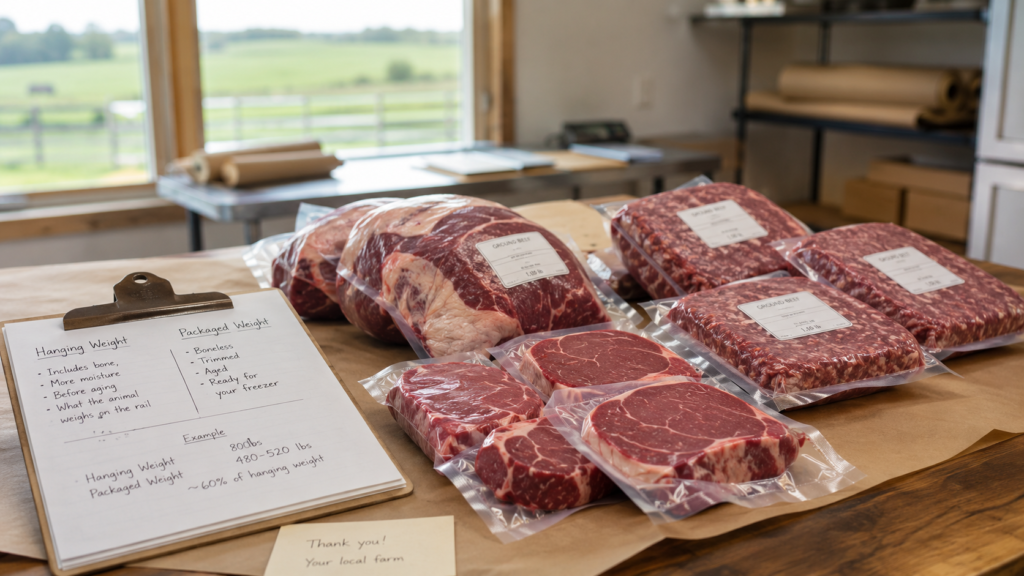
One of the fastest ways to get confused when buying a beef share is to start comparing weights.
You might hear a farm mention live weight, then hanging weight, then packaged weight — and if you are new to buying direct, it can feel like the numbers keep shrinking for no obvious reason. That is usually the moment people start wondering whether they misunderstood the process, or whether something is off.
Neither. This is one of the most normal parts of buying beef in bulk. The different weight terms are not tricks or loopholes. They are describing different stages of the animal as it moves from a living animal to packaged beef in your freezer.
If you are buying a quarter, half, or whole cow, understanding those stages matters. It helps you compare farms more confidently, ask better questions, and set realistic expectations before the beef ever gets to you.
Why beef share weights confuse so many first-time buyers
Most of us are used to buying beef one package at a time.
At the grocery store, the number on the label is the number you pay for. There is no reason to think about what that cut weighed before trimming, aging, or deboning. But when you buy a beef share, you are stepping further upstream — dealing with the animal before it becomes the mix of steaks, roasts, ground beef, and bones you actually bring home.
That means the weight you hear at the start of the process is not the same as the weight you end up storing in your freezer. That gap is normal. It is also one of the most important things to understand before buying direct.
What is live weight?
Live weight is the approximate weight of the animal while it is still alive.
It can be useful as a rough reference point, but for most beef share buyers it is not a meaningful number. You are not taking home the live animal, and you are not receiving that full weight as edible beef. Live weight includes everything — hide, head, hooves, internal organs, blood — none of which ends up as packaged cuts.
If a farm mentions live weight, treat it as background context, not as the number that tells you what you will actually receive.
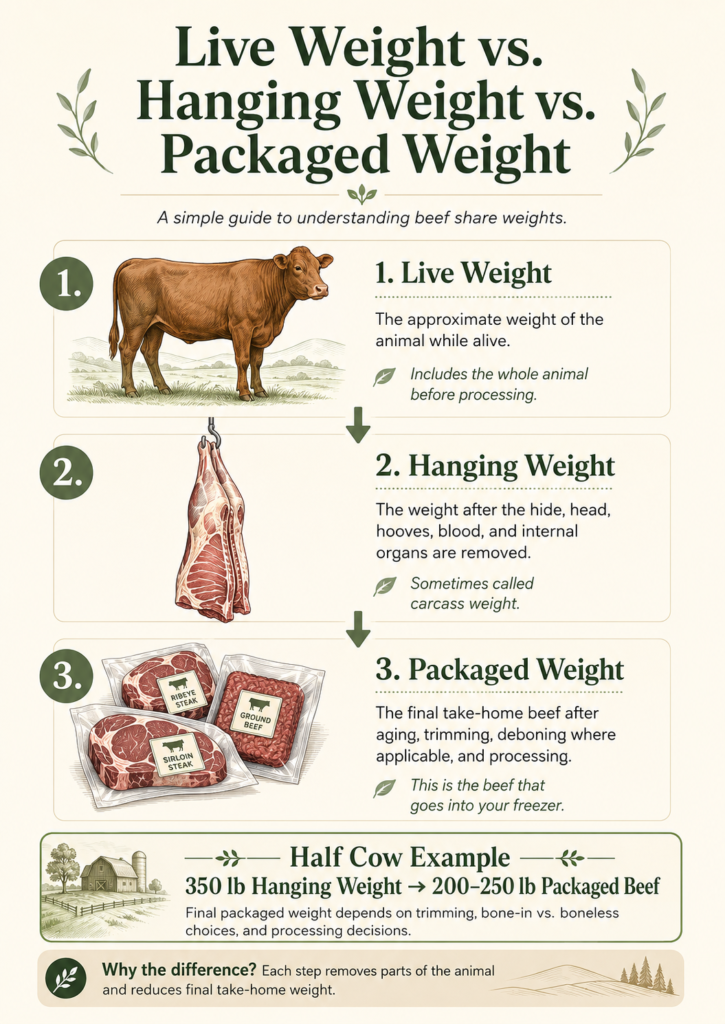
What is hanging weight?
Hanging weight, sometimes called carcass weight, is the weight of the animal after slaughter, once the hide, head, hooves, blood, and internal organs have been removed. The carcass is split and hung to chill and age before final processing.
This is the number many farms use for pricing, because it reflects the usable carcass more accurately than live weight and is measured at a consistent point in the process.
For first-time buyers, hanging weight is often the first number that feels real. But it is still not the same as what you take home. It is a transitional number — the animal in process, not the beef in your freezer.
What is packaged weight?
Packaged weight is the amount of beef you actually take home after the carcass has been aged, trimmed, cut, deboned where applicable, ground, and wrapped.
This is the number that matters most for practical planning. You may also hear it called take-home weight, finished weight, cut weight, or processed weight. Different farms and butchers use slightly different language, but the idea is the same: this is the usable beef you receive.
Why is packaged weight lower than hanging weight?
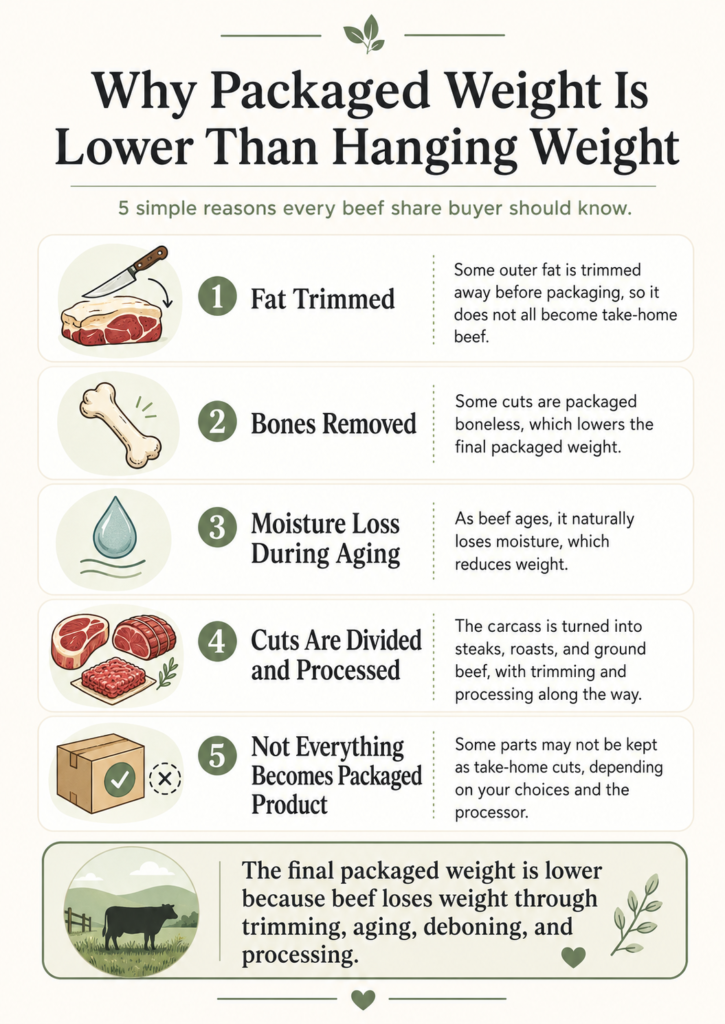
This is the part that surprises people most.
Packaged weight is lower because more changes happen after the carcass is hung. Fat gets trimmed. Some cuts are deboned. Moisture is lost during aging. The carcass gets broken down into specific steaks, roasts, ground beef, and other cuts, and some pieces are simply not kept as packaged product.
Hanging weight is still a carcass in process. Once the butcher turns it into finished cuts, the total weight naturally drops.
That does not mean you are losing value. It means you are moving from a whole carcass to usable, finished beef. The form changes. The weight reflects that.
A concrete example
That gap catches a lot of first-time buyers off guard — but it is completely normal. Nothing has gone wrong. The weight is changing because the form is changing.
A half cow with a hanging weight of around 350 pounds will typically yield somewhere between 200 and 250 pounds of packaged beef after aging, trimming, deboning, and processing.
Knowing this in advance means you will not be surprised when the numbers look different at pickup than they did when you placed your order.
Hanging weight vs. packaged weight: which one matters more?
Both matter, but for different reasons.
Hanging weight matters because many farms price from it, it provides a standardized comparison point, and it reflects the carcass before final cutting decisions are made.
Packaged weight matters because it tells you what actually goes in your freezer, it determines how much space you need, and it gives you the clearest picture of the practical value of your share.
When comparing farms, the most useful questions are whether pricing is based on hanging weight or packaged weight, whether butcher fees are included or separate, what a typical packaged yield looks like for the share size you are considering, and how much flexibility you have in how cuts are processed.
The most transparent farms answer these questions clearly and upfront. That kind of openness is part of what makes buying direct worthwhile — and one of the things a directory like FieldToKitchen is specifically designed to help surface.
How cut sheet choices affect what you take home
Packaged weight is not just about the animal. It is also shaped by how you choose to have the beef processed.
Bone-in cuts weigh more than boneless versions, but the bone is part of that weight. Thicker steaks mean fewer total packages. Keeping certain cuts whole changes how the meat is divided. More trim going into ground beef shifts the overall mix. Asking for bones or organ meats adds to what you take home rather than leaving those aside.
This is why “how many pounds do I get?” is only part of the question. The fuller question is: how is that weight calculated, and how do my processing choices affect it?
What to ask a farm about beef share weights
A good farm should welcome these questions. In fact, how clearly they answer them tells you a lot about how they operate.
Before committing to a purchase, it is worth asking:
Do you price by live weight, hanging weight, or packaged weight? Are butcher or processing fees included in the quoted price? What is the typical packaged yield for a quarter, half, or whole share? How much variation should I expect? How does aging affect final take-home weight? Do different cut sheet choices affect my final packaged amount? Will I receive a clear breakdown of what I am getting?
You are not being difficult by asking these questions. You are doing what informed buyers do. And the farms worth buying from will not just tolerate those questions — they will answer them clearly.
What to know before you buy beef shares
Live weight, hanging weight, and packaged weight are not competing numbers. They are different stages of the same process.
Once you understand what each number means, comparing farms gets easier, your expectations become more realistic, and the experience of buying direct starts to feel less like navigating fine print and more like making a genuinely informed decision.
You do not need to become an expert in carcass math before buying a beef share. You just need to know enough to ask the right questions — and to recognize the farms that answer them well.